Every ad / Brian Lewis
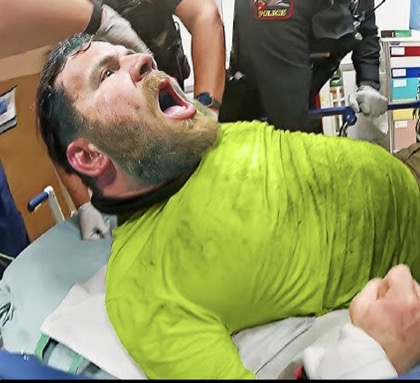
Every. Single. Day.
- Advertiser
- Brian Lewis other
- Running
- 139 days (since 2026-06-20)
- Status
- Active
- Platforms
- Facebook, Instagram, Audience_Network, Messenger, Threads
- Variants
- 1
- Ad Library
- Open the live ad ↗
Ad copy
Every. Single. Day.
Yelling. Urinating. Vomiting. Deffactating. I used to show up at the ER every day. I was their most frequent flyer. I’d come in, sober up, leave… and be back completely trashed less than an hour later. Every. Single. Day. Everyone there was on a first-name basis with me. They knew my voice before EMS even turned the hallway corner. One day, a nurse took pity on me. She was punching out, and since nobody in my family would come pick me up, she offered to drive me “home.” Ethically questionable for her, sure, but none of them snitched. She told me later it was heartbreaking watching me stand on my dad’s lawn — just standing there — because nobody wanted me to come inside. My dad just left me standing out there. I got back in her car, and she asked me, “Where are you going?” I told her I had nowhere. She got real with me. Told me that some of them at the ER were starting to not care about me anymore because I was putting myself in harms way again and again. If I’d die, a few of them honestly wouldn’t care. Then she asked me: “What happened that got you here?” I didn’t even know where to begin. She asked if I was trying to die. And that's the first time I admitted to myself and anyone else that I was... She told me if she took me to their sister hospital and told them I was actually trying to kill myself, they’d finally send me somewhere for real help — instead of letting me keep running through this drunk-sober-discharge cycle. So she took me there. Walked me inside. They all knew me too — I used to cycle through all three hospitals in that system. And that day, I finally said it out loud: I drink because I’m trying to die. After I was taken in and it was confirmed that I was no longer an immediate risk to myself, the doctor came in to talk about the blood tests they’d done on me. My liver enzymes were through the roof. The doctor said if I kept going like this, I might not see the end of the year. He explained that every drink turns into a compound called acetaldehyde—thirty times more toxic than alcohol itself. It builds up in the liver, kills cells, and triggers inflammation that spreads through the body. He said men are especially at risk because as we age, our detox pathways slow down, and our iron stores rise, which accelerates oxidative stress. The damage builds faster than we feel it. That stuck with me. He referred me to a clinical nutritionist named Elizabeth. I walked into her office expecting a lecture, but instead, she spoke with quiet confidence. After looking over my labs, she said, “Your liver can regenerate—but not if you keep starving it of what it needs to repair.” I told her I was quitting the booze, as I was terrified for my life, but that I still wanted to have a drink every once in a while. She smiled and said, “You don’t have to give up drinking entirely, if you can manage it. You just have to protect yourself while you do.” It was the first time anyone gave me hope. She explained that alcohol damages the body on three levels: first, toxic byproducts like acetaldehyde overwhelm the liver; second, inflammation and oxidative stress accelerate aging throughout the organs and brain; and third, the body’s natural detox system becomes depleted over time. Most liver supplements, she said, only address one of these three. But if I wanted to repair and protect my liver, I had to counteract all three simultaneously. Elizabeth had developed something different—a formula designed to do just that. Not another quick detox or milk thistle pill, but a complete, research-backed system that supported all three pathways of liver damage. It was meant to speed up detoxification, calm inflammation, and help liver tissue regenerate. I was skeptical, but after what I’d just been through, I had nothing to lose. The first week, I didn’t drink at all. I just followed her protocol every day. I didn’t feel miraculous overnight—just lighter, a little clearer, and more hopeful. By week two, I had more energy than I’d had in years. The stabbing pain in my side faded. My appetite returned. I could sleep through the night again. After a month, I went back to my doctor for another blood test. I was nervous, half expecting more bad news. He looked at my results, frowned, and said, “I’m not sure this is right—we need to rerun these.” He came back fifteen minutes later and asked, “What are you doing differently?” My ALT had dropped from 110 to 38. AST from 90 to 28. GGT from 75 to 36. Everything was back in the healthy range. For the first time in years, my liver was working again. But the biggest change wasn’t just in my body—it was in my life. The brothers who once broke my door down now come over every Sunday for dinner. We cook together. We laugh again. Sometimes we share a few beers, but it’s different now. I don’t drink to forget. I drink because I’m alive to remember. And yes, I still take Elizabeth’s formula every day. It’s called Cloud9 Daily Restore. It contains N-Acetyl Cysteine to boost glutathione and neutralize toxins, Milk Thistle Extract to repair liver tissue, DHM to accelerate alcohol detox and reduce next-day symptoms, Ashwagandha and 5-HTP to calm the nervous system and ease anxiety, Advanced B1 to restore energy and focus, and a precise mix of Potassium and Sea Salt to rehydrate and balance electrolytes. After a few months, I felt like a completely different person—stronger, sharper, more alive. My doctor still checks my liver enzymes every few months, and they’ve stayed in the optimal range. I’m not perfect. I still have the occasional drink. But now I know my liver can handle it, and I don’t live in fear anymore. If you drink—even moderately—don’t wait for a moment like mine to wake you up. Cloud9 Daily Restore isn’t a miracle, but it’s the most practical protection I’ve found. You can try it completely risk-free with a full 60-day money-back guarantee. You can take it daily, run your labs, and see the results yourself. If your liver markers don’t improve—or if you don’t feel the difference—you can send the bottles back, even if they’re empty, for a full refund. No hassle. No fine print. You’ve spent years working hard, carrying stress, and pushing your body to its limits. It’s time to give something back to it. Your liver can heal. Your energy can return. You don’t have to quit living—you just have to start restoring.
Learn more
How the ad works
native content shock visual
Avoid or discover the cause behind extreme physical agony and high-stakes emergency intervention.
none stated
Hook
shock value The visceral facial expression of a man screaming in agony on a medical stretcher while being held by gloved hands and a police officer.. Extreme emotional distress, bright neon clothing, and urgent emergency context create intense curiosity and shock value.
Angles
- Curiosity and drama angle driven by a sudden, severe medical or law-enforcement emergency.
- Pain and fear avoidance angle highlighting intense physical suffering.
Every word on the image
- badge “POLICE”
What's shown
- People An adult male with facial hair screaming in pain on a gurney; medical personnel in gloves holding his head; a police officer standing in the background.
- Setting An emergency room or medical triage setting.
- Product None visible.
- Composition Close-up, slightly tilted dynamic angle focusing on the subject's open-mouthed scream and upper body.
- Colors High-visibility neon green/yellow, clinical whites, pale blues, and dark uniform tones.
- Style Photo
Proof elements
Source data: image breakdown